
Introduction
Data center cooling systems run nonstop, rejecting heat around the clock. The water and air that circulate through open cooling towers pick up leaves, dust, pollen, scale, and algae along the way. Every hour a tower operates, that loop is exposed to whatever the outside environment throws at it.
Uncontrolled buildup in that water can throttle flow, damage pumps, and put mission-critical cooling capacity at risk.
A cooling tower strainer is a small, unglamorous component. It's a screen or basket sitting quietly in a pipe run. But its daily work shows up in protected pump seals, cleaner heat-exchanger tubes, and fewer emergency callouts. Maintenance becomes something you can schedule instead of scramble to fix.
This article covers what cooling tower strainers do, how they protect data center cooling infrastructure, what happens when they're ignored, and how to fold them into a complete water-management program.
TL;DR
- Cooling tower strainers capture debris before it clogs nozzles, damages pumps, restricts flow, or fouls heat-transfer equipment.
- Manual basket, duplex, screen, and automatic/self-cleaning strainers each suit different debris loads, flow needs, and staffing levels.
- A strainer is one layer in water management, not a substitute for treatment, disinfection, basin cleaning, blowdown, or side-stream filtration.
- Track differential pressure, inspect during operating rounds, log cleanings, and coordinate maintenance with redundancy and change control.
What Is a Cooling Tower Strainer?
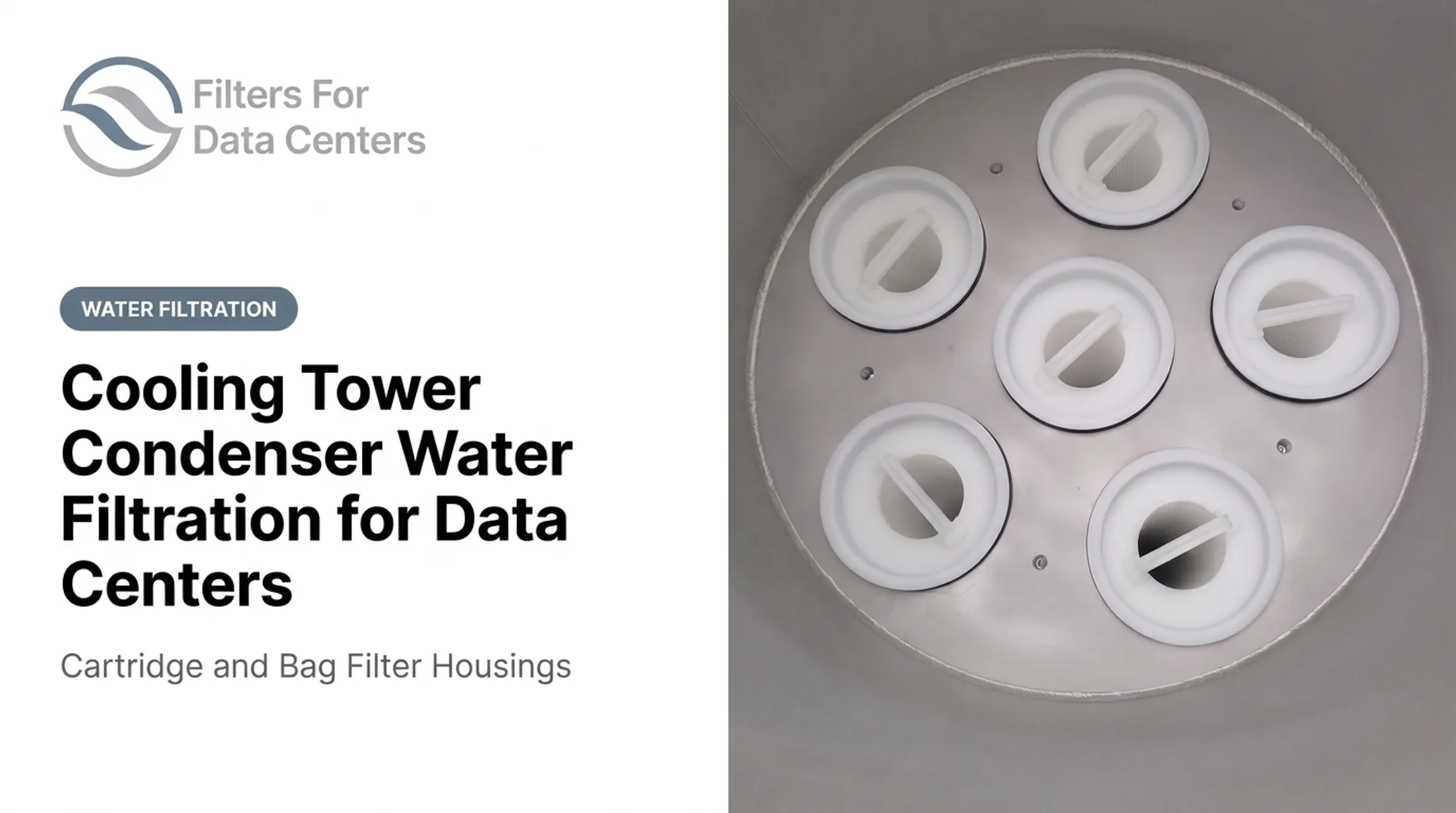
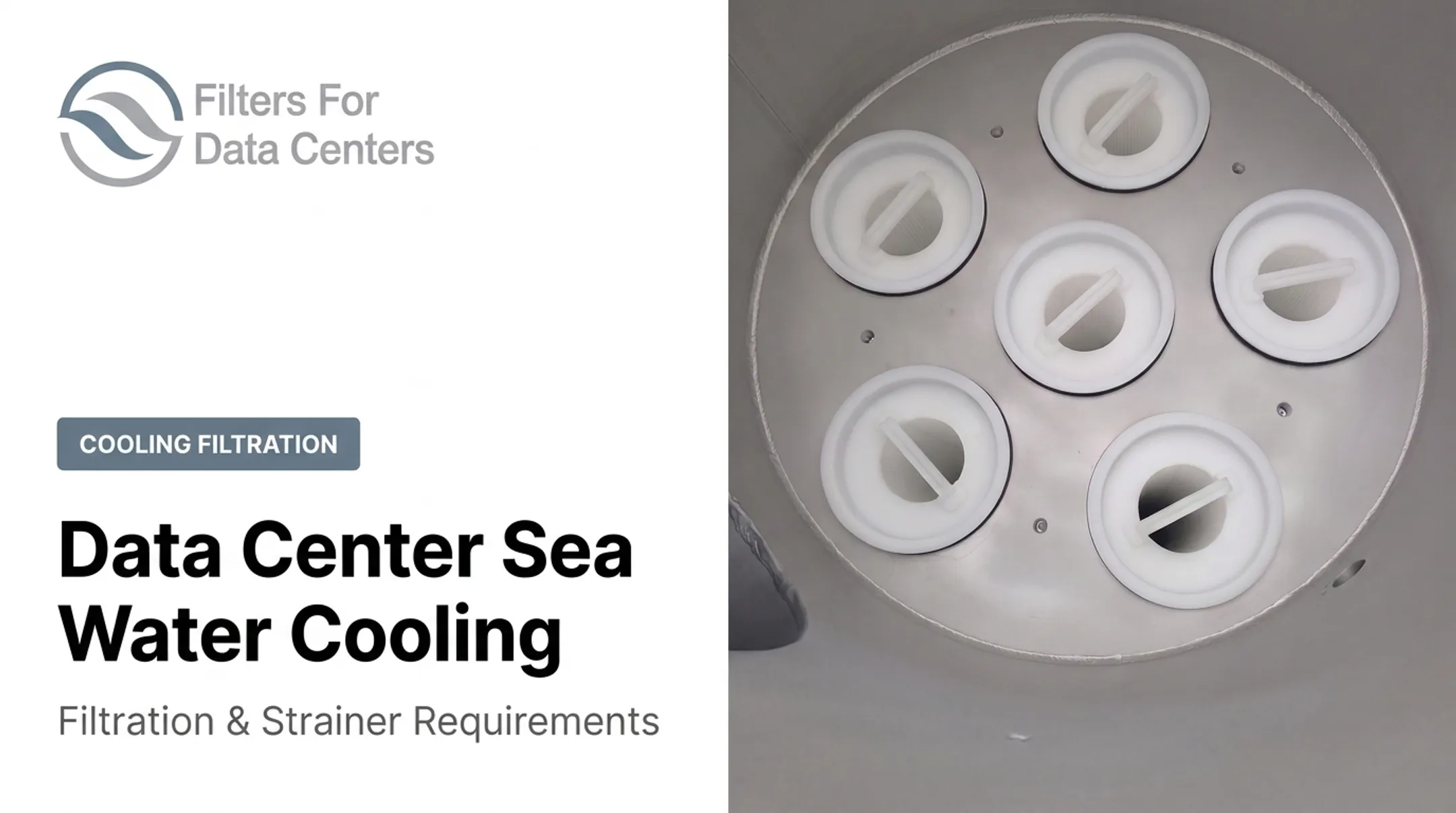
A cooling tower strainer is a housing with a removable screen or basket, installed directly in the circulating water path. Water flows through the screen before reaching protected equipment. Anything larger than the screen opening gets trapped and pulled out during cleaning.
Common installation points include:
- Pump suction lines, protecting impellers and seals from grit pulled off the basin floor
- Basin outlets, where settled leaves, scale fragments, and biological debris concentrate
- Makeup-water lines, screening out debris entering with fresh water supply
- Distribution piping, protecting spray nozzles before water reaches the fill
EVAPCO's operation and maintenance guidance notes that malfunctioning spray nozzles often signal a suction strainer isn't doing its job, letting foreign matter reach distribution piping. That's a direct, documented link between strainer condition and nozzle performance.
Where a Strainer's Job Ends
A strainer removes physical debris: leaves, grit, scale chips, biological fragments. It does not address:
- Scale formation from dissolved minerals
- Corrosion from water chemistry imbalances
- Fine suspended solids too small for the screen
- Microbial growth and Legionella risk
Those require water treatment, blowdown, and biocide programs running alongside the strainer, not instead of it.
Strainer, filter, and basin sweeper aren't interchangeable:
- Strainer — captures larger debris on a screen or basket in the main flow path
- Filter — bag, cartridge, or sand media that removes finer suspended solids, often in a side-stream loop
- Basin sweeper — agitates settled debris so a side-stream filter can pull it out; it doesn't capture debris itself

These technologies work as a layered system, not as substitutes for one another.
Data Center Filters supplies simplex and duplex strainers plus reusable stainless-steel baskets for cooling tower, condenser, and process-water systems. Operators can match screen opening to the downstream equipment being protected.
Key Advantages of Cooling Tower Strainers
Strainer benefits go beyond "catching debris." In a data center environment, that translates into cooling availability, equipment life, predictable maintenance windows, and lower energy waste. A strainer is easy to overlook when you treat it as isolated hardware. Against the cost of downtime and equipment damage, though, it's one of the cheaper insurance policies in the cooling loop.
Protects Pumps, Nozzles, Heat Exchangers, and Valves
Leaves, grit, scale fragments, and biological slime don't stay in the basin. Pulled into circulating water, they abrade pump impellers and seals, clog spray nozzle orifices, and settle on heat-exchanger tubes where they insulate against heat transfer.
A strainer positioned ahead of these components intercepts debris before it reaches them. Duplex and simplex baskets built for cooling tower service are commonly specified for pump, heat exchanger, valve, and meter protection. Screens use perforated plate or wire mesh, with openings from roughly 1/32 inch up to coarser mesh depending on what's downstream.
Watch for these indicators:
- Rising differential pressure across the strainer housing
- Reduced flow or pump cavitation-like noise
- Pump vibration or unusual bearing wear
- Nozzle blockage or uneven spray pattern
- Declining heat-rejection performance
EVAPCO's guidance ties nozzle malfunction directly to strainer condition, making differential pressure readings and nozzle inspection two of the fastest ways to confirm a strainer is doing its job.
Maintains Water Flow and Cooling Performance
Every strainer creates some pressure drop. That's the tradeoff for capturing debris. The goal is balance: enough screen area to trap debris without starving pump suction or forcing pumps to work harder than they were designed for.
A clean strainer typically runs a modest pressure drop, often around 0.5 psig on a pump suction line, climbing as debris accumulates. Left unchecked, accumulated fouling raises water-side pressure drop and drives premature pump failures.
Stable flow means consistent water distribution across the fill and steady heat rejection. An underspecified strainer restricts flow the same way an unprotected, heavily fouled system does, just earlier in its life.
Reduces Reactive Maintenance and Supports Uptime
A planned strainer-cleaning routine shifts work from emergency response to scheduled maintenance, which matters most where data centers run tight maintenance windows.
In mission-critical facilities, preventive maintenance is the standard way to minimize equipment failures. Deferred maintenance doesn't stay contained to one component; it becomes a risk to the whole facility.
Practical KPIs worth tracking:
- Unplanned work orders tied to pump or nozzle issues
- Cleaning frequency and debris load over time
- Pump-related alarms
- Equipment downtime hours
Redundancy design matters too. Duplex strainers, isolation valves, alarms, and spare baskets let teams clean or swap an element without shutting down the cooling path, subject to the facility's own engineering design and change-control procedures. That's the difference between a five-minute basket swap and an unplanned outage.
What Happens When Cooling Tower Strainers Are Missing or Ignored
Debris doesn't announce itself. It accumulates in stages:
- Leaves, grit, and biological debris enter the water loop from the basin or makeup water.
- Screens or nozzle orifices begin trapping material, but strainer baskets go uncleaned.
- Flow through the strainer restricts as the basket loads up.
- Pumps work harder against the restriction, stressing seals and bearings.
- Water distribution across the tower fill becomes uneven.
- Heat-transfer surfaces foul, cutting into cooling capacity.

Warning signs to investigate:
- Rising differential pressure
- Declining flow
- Cavitation-like noise or vibration
- Repeated equipment alarms
Any one of these can have multiple causes, so treat them as a prompt to investigate—not a confirmed diagnosis on their own.
A 2024 case documented in Chiller & Cooling Best Practices shows the same failure path. A plugged strainer, loaded with debris released during compressor-cooling modification work, produced a 22°F water temperature difference and only a 5 psi pressure drop through the machine, then triggered high-temperature trips.
Clearing the strainer resolved the problem. The incident was on a condenser circuit, not a cooling tower, but the restriction mechanism is the same one that shows up in tower loops.
For a data center, that kind of restriction isn't just a maintenance inconvenience. A partially blocked strainer that reduces thermal margin during a high-load period can force emergency maintenance at exactly the wrong time, when redundancy is already stretched thin.
Neglected strainers often mask bigger problems. A basket loading up faster than expected, or catching unusual debris, tends to point upstream: high suspended solids in makeup water, poor basin housekeeping, scaling, corrosion, or inadequate biological control. Treat a fast-fouling strainer as a diagnostic clue, not just a cleaning chore.
How to Get the Most Value from Cooling Tower Strainers
Reliable strainer performance depends on correct design, installation, monitoring, and maintenance, not just bolting on a basket and walking away.
Select the Strainer Around Actual System Conditions
Match the strainer to real operating conditions:
- Flow rate and pipe size
- Debris type and concentration
- Required filtration opening (screen mesh or perforation size)
- Allowable pressure drop
- Water chemistry, temperature, and materials compatibility
- Access for cleaning and basket removal
- Consequences of a bypass or single-point failure
| Strainer Type | Continuity | Cleaning Method | Best Fit |
|---|---|---|---|
| Manual basket (simplex) | Line must be isolated | Remove and clean basket | Lower-flow, non-critical lines |
| Duplex | Continuous | Divert flow, clean idle basket | Mission-critical pump suction lines |
| Automatic/self-cleaning | Continuous | Motorized backwash or rotating nozzles | High debris load, limited staffing |
| Screen (basin) | Depends on design | Manual or duplicate screens | Basin outlet, coarse debris |
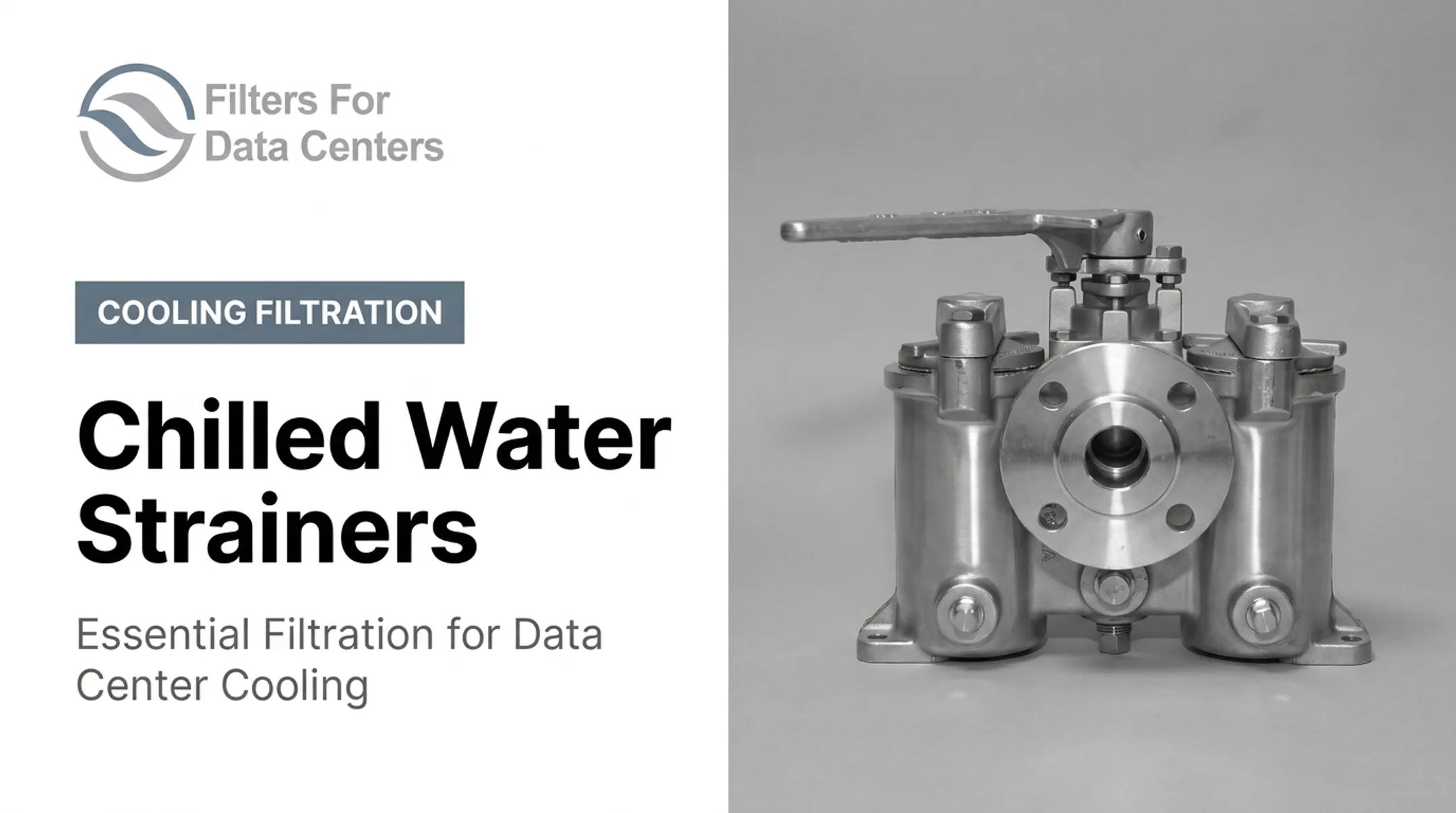
Duplex configurations, like the Eaton 53BTX strainers Data Center Filters carries for cooling tower service, let one basket stay in service while the other is cleaned. That matters when there's no acceptable window to interrupt flow entirely.

Design for Inspection, Isolation, and Safe Service
Build the installation so service work doesn't require unsafe improvisation:
- Isolation valves on both sides of the strainer
- Drain or vent provisions for depressurizing before opening
- Differential-pressure gauges or transmitters
- Enough clearance to pull the basket straight out
- Correctly seated baskets and compatible gaskets
Before opening any strainer, follow lockout/tagout procedures under OSHA 1910.147, isolating electrical, mechanical, and stored energy sources before work begins.
Confirm PPE is appropriate for chemical exposure, wet surfaces, and biological hazards, and evaluate basin areas for confined-space classification before anyone enters. Site procedures and manufacturer instructions always take precedence over general guidance.
Monitor Trends and Maintain on Evidence
Skip the fixed-interval-only approach. Track differential pressure, flow readings, pump condition, debris type, and cleaning dates over time.
Inspection frequency should flex with the season, local airborne debris, nearby construction activity, water chemistry shifts, biological growth, storm events, and operating load. A basket that needs weekly cleaning during pollen season might go a month between cleanings in winter. Treat the manufacturer's baseline interval as a starting point, then adjust based on what your own trend data shows.
Coordinate Strainers with the Full Cooling-Water Program
A strainer is one layer, not the whole strategy. Coordinate it with:
- Basin cleaning and blowdown
- Chemical treatment and water-quality testing
- Disinfection protocols
- Side-stream filtration for fine suspended solids
- A basin sweeper, where settled debris needs to be kept suspended for removal
Water-side protection is half the picture. Airborne debris entering through outdoor cooling and intake equipment is the other half. Data Center Filters builds custom external air-intake filtration for that air-side portion of the strategy, with AFF Field Services available for measurement, installation, and maintenance support.
Air-intake filtration complements water-side strainers. It protects a different entry point into the same cooling system, and it doesn't replace strainer maintenance.
Verify Performance After Maintenance
A thorough closeout matters as much as the cleaning itself:
- Reinstall the basket or screen correctly, checking seating and gaskets.
- Open isolation valves gradually rather than all at once.
- Inspect for leaks or signs of bypass around the element.
- Confirm flow and differential pressure return to expected baseline.
- Verify alarms and monitoring points read normal.
Record the work: date, debris type found, parts replaced, water-quality observations, and follow-up actions. That record is what lets a maintenance team spot a recurring contamination source instead of cleaning the same symptom every month.
Conclusion
Cooling tower strainers protect the physical water path, catching debris before it reaches pumps, nozzles, heat exchangers, and valves. That's a modest job description for a component that prevents a lot of expensive problems.
The best results don't come from installing a basket and forgetting it. They come from treating strainer care as part of system reliability:
- Select the right strainer type for actual system conditions
- Build in safe access and isolation for cleaning
- Track differential pressure instead of guessing at intervals
- Coordinate maintenance with basin cleaning, water treatment, and disinfection
Data Center Filters supplies simplex and duplex strainers, strainer baskets, and related stainless-steel process components sized for cooling tower and condenser-water systems, alongside the air-intake filtration and field-service support that cover the rest of a data center's cooling protection needs.
Strainer maintenance isn't a one-time installation task. It's a continuous reliability practice, one that pays for itself every time it prevents an unplanned pump or nozzle failure.
Frequently Asked Questions
What is a cooling tower strainer and what does it do?
A cooling tower strainer is a screen- or basket-based device installed in the circulating water path that captures physical debris like leaves, grit, and scale fragments. It protects pumps, nozzles, piping, and heat-transfer equipment from clogging and abrasion.
How often should a cooling tower be cleaned and disinfected?
CDC guidance recommends offline cleaning and disinfection at least annually, plus before startup, after idling, and after shutdown. That whole-tower schedule is separate from routine strainer basket cleaning, which happens far more often based on debris load.
What is the basin in a cooling tower?
The basin is the lower section that collects cooled circulating water before it returns to the system. Settled debris, scale, and biological growth there can degrade water quality and restrict flow if left unmanaged.
What is a basin sweeper for cooling towers?
A basin sweeper is a piping-and-nozzle arrangement that agitates settled debris so it can be pulled into a side-stream filter for removal. It complements strainers and water treatment rather than replacing either one.
What is a sand filter system for a cooling tower?
A sand filter is a side-stream filtration system that passes a portion of circulating water through graded media to remove fine suspended solids. Unlike a strainer, it doesn't sit directly in the main flow path protecting equipment; it polishes water quality over time.