
The seawater circuit has to be engineered around salt, suspended solids, marine organisms, biological growth, and corrosion. Skip that engineering, and an unprotected intake will foul heat exchangers, restrict flow, drive up pumping energy, accelerate corrosion, and eventually threaten cooling availability — the one thing a data center can't afford to lose.
This article covers the practical side: cooling configurations, filtration stages, strainer selection, monitoring, materials, maintenance, and permitting.
Key Takeaways
- Indirect, closed-loop designs are the safer default: seawater never touches servers or sensitive cooling equipment directly.
- Intake protection needs multiple stages, from coarse screening to strainers matched to the heat exchanger.
- Strainer selection depends on flow, pressure drop, debris type, fouling rate, and maintenance access — not mesh size alone.
- Design also requires corrosion control, marine-life protection, water-quality monitoring, and a documented cleaning plan.
How Seawater Cooling Works—and Where Filtration Fits
The heat-rejection path in most seawater-cooled data centers looks similar to any water-cooled facility, with one extra loop. Heat moves from IT equipment into a facility water loop, then through a heat exchanger, and finally into seawater (or another external heat sink) for discharge.
Indirect vs. Direct vs. Subsea Designs
Not every seawater project looks the same:
- Indirect seawater-source cooling — seawater exchanges heat with a closed facility loop through a plate-and-frame or shell-and-tube heat exchanger. Servers never see seawater.
- Seawater-cooled air or water exchangers — seawater cools an intermediate fluid used for CRAC/CRAH units or chilled-water systems.
- Direct seawater circulation — rare, and generally limited to non-critical or heavily filtered applications given the corrosion and fouling exposure.
- Underwater or subsea data centers — the entire enclosure sits in the water, relying on the surrounding sea as a passive heat sink.

Each configuration creates different filtration and maintenance demands. A subsea pod, for instance, fouls on the outside rather than the inside.
After two years underwater, Microsoft's Project Natick vessel had grown algae, barnacles, and sea anemones on its hull. Biological growth is expected in any seawater application.
Why You Can't Just Evaporate Seawater
Freshwater cooling towers rely on evaporation. Seawater doesn't tolerate that well. As it evaporates, dissolved salts and minerals concentrate, then precipitate as scale.
That scale drives deposits, clogging, corrosion, and chemistry-control problems most operators would rather avoid. Indirect, closed-loop designs dominate for that reason.
The Flow Path, Simplified
A typical seawater loop moves through these stages:
- Intake screen
- Strainer
- Pump
- Finer filtration (if required)
- Heat exchanger
- Discharge
Monitoring instruments sit at each stage. Filtration protects the pumps and heat exchanger first. The isolated secondary loop protects the facility's critical cooling equipment second. Those two layers work together; either one alone leaves the plant exposed.
What Filtration and Strainer Stages Does a Seawater Cooling System Need?
A seawater intake needs a layered filtration train: no single device handles everything from a floating log to a barnacle larva.
Stage 1: Coarse Screening
Intake screens or trash racks block large debris: leaves, seaweed, shell fragments, floating litter. Without this stage, pumps take the hit first.
Stage 2: Strainers for Solids and Marine Organisms
This is where most of the protective work happens. Options include:
- Simplex strainers: single-basket units when periodic cleaning shutdowns are acceptable. 316 stainless resists chlorides better than carbon steel; perforations run 1/32 to 3/4 inch, with mesh from 20 to 400.
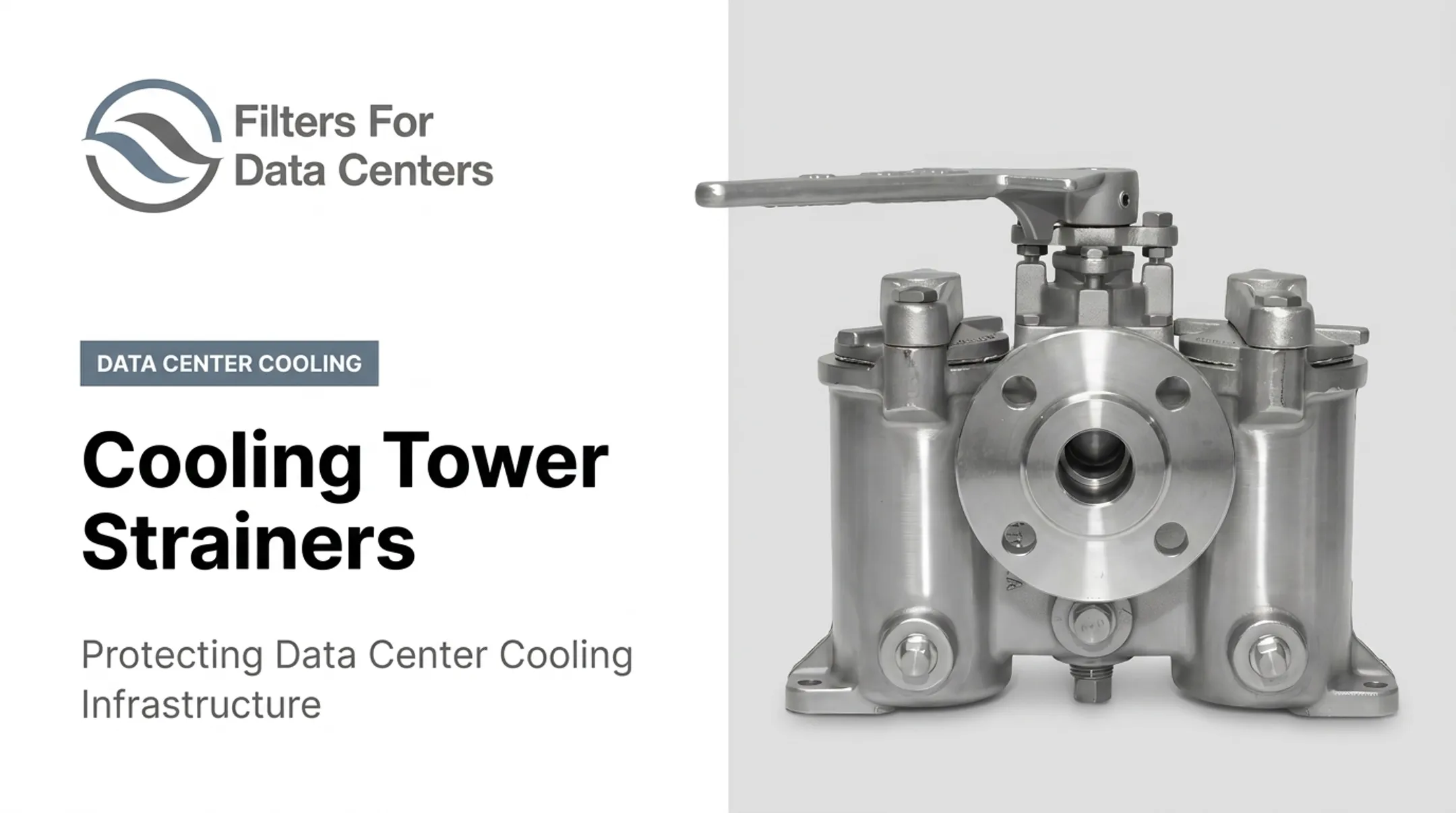
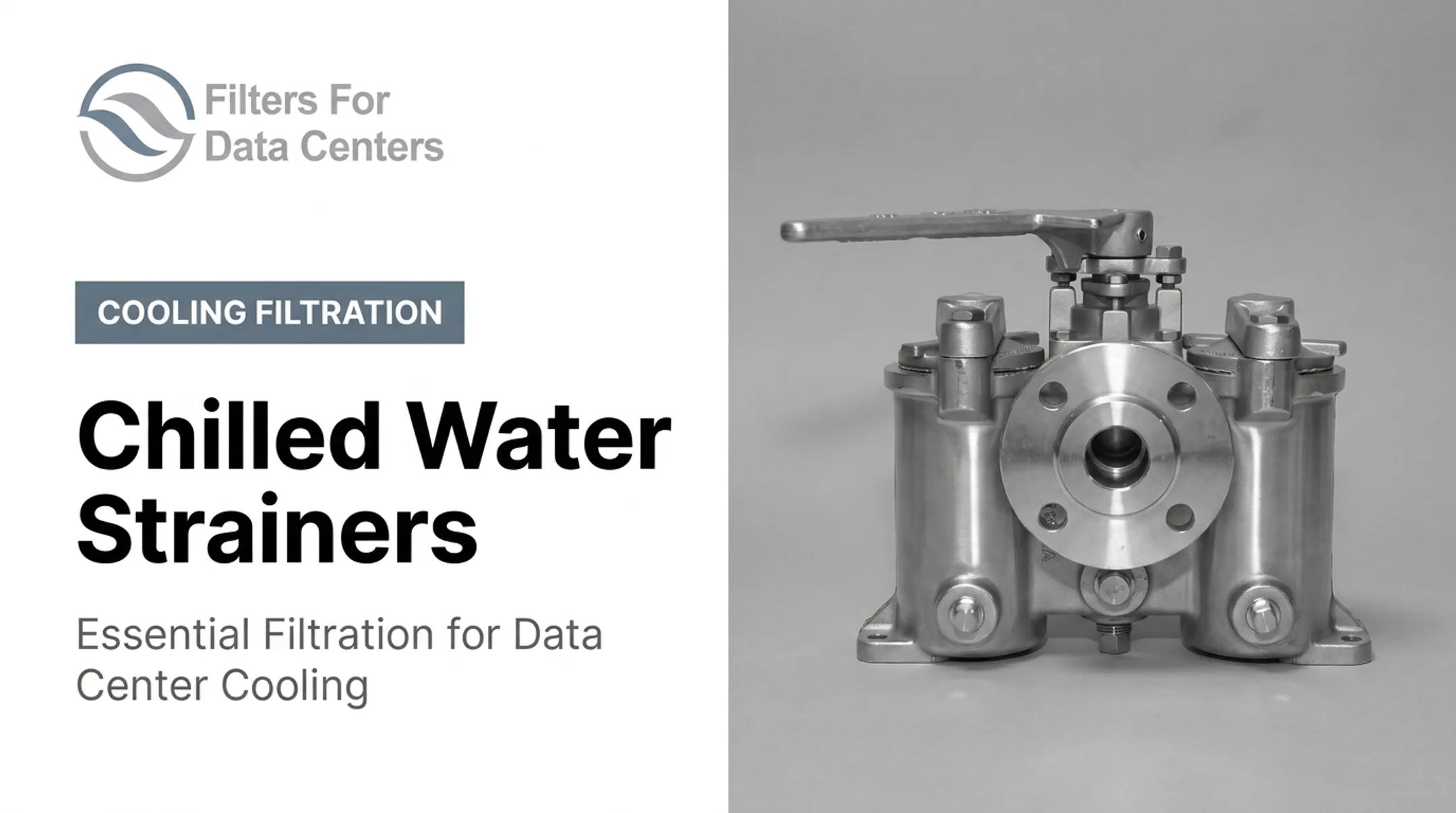
- Duplex strainers: dual-chamber units that keep one basket in service while the other is isolated and cleaned—built for facilities that can't interrupt flow.
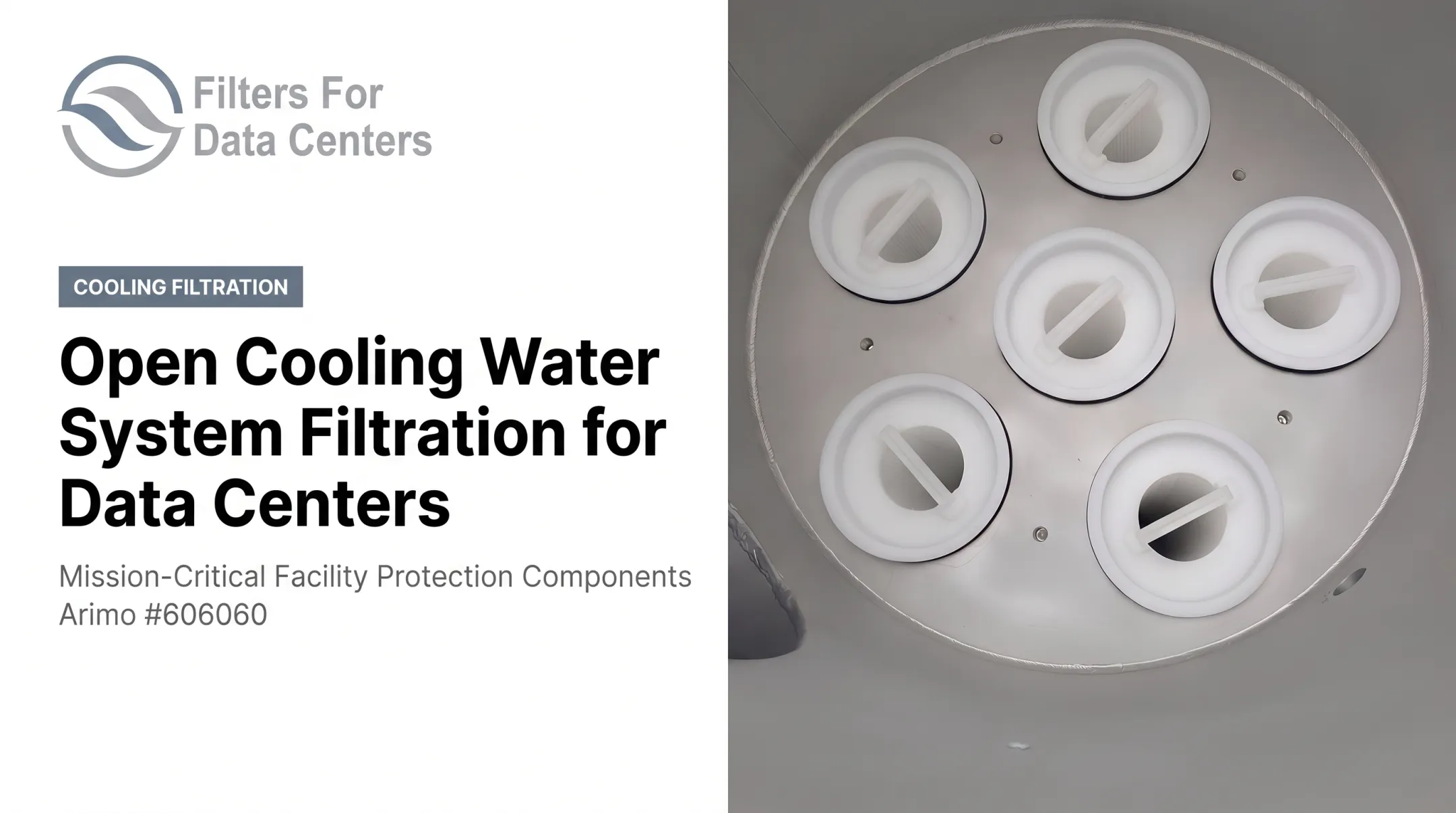
- Automatic self-cleaning/backwashing strainers: handle constant biofouling loads and flush debris without stopping filtration.
- Wedge-wire and traveling-screen designs: common on larger intakes with heavier marine-organism loads.
Eaton's Model 72 simplex strainer is specifically listed for seawater cooling and raw-water filtration, with quick-opening covers and optional differential-pressure instrumentation for basket monitoring. Its duplex counterpart, the Eaton 53BTX, uses positive chamber isolation and a manual flow diverter so one basket can be pulled for service without touching the other.
Stage 3: Fine Filtration for Heat Exchanger Protection
Plate-and-frame and shell-and-tube heat exchangers have limits on allowable particle size and fouling tolerance. Always confirm those numbers with the manufacturer rather than assuming. Filter cartridges rated from 0.5 to 100 microns typically handle this polishing stage, with a recommended change-out around 30 psi differential pressure.

Monitoring Every Stage
Every filtration stage needs differential-pressure monitoring, with alarm thresholds confirmed against the equipment maker's guidance rather than a generic number. As a reference point, duplex and simplex strainers commonly trigger cleaning somewhere in the 5-10 psi ΔP range, though the correct setpoint depends on basket configuration and system design.
Biological Fouling Isn't a Mechanical-Only Problem
Barnacles, mussels, algae, jellyfish blooms, larvae, and biofilm all target seawater intakes. Mechanical filtration slows this down but rarely stops it alone. Most facilities pair strainers with water-treatment or antifouling measures designed by qualified specialists.
How to Size and Specify Seawater Strainers
Sizing a seawater strainer starts with data, not a catalog page.
Inputs You Need Before Specifying Anything
- Design and peak flow rates
- Seawater temperature and salinity
- Suspended-solids concentration
- Intake depth and tidal or seasonal variation
- Pump curve and allowable pressure drop
- Target particle size and heat-exchanger tolerance
Finer Isn't Always Better
It's tempting to assume the tightest mesh gives the best protection. It doesn't always work that way.
A finer opening can reduce downstream fouling, but it also:
- Raises pressure drop
- Increases cleaning frequency
- Adds pump demand
- Makes the strainer more vulnerable to rapid blockage during a heavy debris event
Sizing is a balance, not a race to the smallest micron rating.
Velocity Control Matters
Intake velocity affects more than flow efficiency. The EPA's 2014 final rule under the Clean Water Act sets a maximum design through-screen intake velocity of 0.5 ft/s for certain existing facilities, implemented through NPDES permits.
Excess velocity increases entrainment, debris loading, abrasion, and ecological impact. Those risks are why velocity gets engineered, not guessed.
Building in Redundancy
Mission-critical facilities generally need:
- Duty-and-standby filtration trains so one unit can be serviced while the other runs.
- Duplex arrangements (for example, the Eaton 53BTX) that allow basket service without a shutdown.
- Isolation valves with clearly defined bypass limitations.
- Emergency cooling provisions for worst-case blockage scenarios.
Specification Checklist
Before finalizing an order, confirm:
- Connection size and flow capacity
- Materials (housing, basket, seals)
- Pressure rating and cleanability
- Backwash flow and drain routing
- Access clearances for maintenance
- Instrumentation and spare-parts availability
- Compatibility with the selected heat exchanger
Final design values still need sign-off from the mechanical engineer, pump and heat-exchanger manufacturers, water-treatment specialists, and the authority having jurisdiction. A catalog spec sheet is a starting point, not the finish line.
Materials, Corrosion, and Water-Quality Requirements
Seawater is aggressive toward metal in ways freshwater rarely is. The main degradation mechanisms to design against:
- General corrosion — uniform metal loss over time
- Pitting — localized cavities that can penetrate walls quickly
- Crevice corrosion — occurs in stagnant micro-environments, like gasket interfaces
- Erosion-corrosion — accelerated by high flow velocity
- Microbiologically influenced corrosion — driven by biofilm activity
- Galvanic corrosion — happens when dissimilar metals are coupled in an electrolyte

Material Selection
316 stainless steel is a common choice for strainer housings, baskets, and wafer butterfly valve bodies in seawater service. Pair seals in Buna-N, EPDM, PTFE, or Viton based on temperature and chemical exposure.
Copper-nickel alloys and duplex or super-duplex stainless steels are also used in seawater piping and heat exchangers for corrosion and fouling resistance. Treat any material recommendation as a starting point. Always verify against current manufacturer data and the specific water chemistry on site.
What to Monitor
Track these water-quality and corrosion indicators:
- Salinity and temperature
- Turbidity and suspended solids
- Biological activity
- Corrosion indicators
Rising turbidity or unexpected biological activity should trigger an inspection rather than waiting for the next calendar-based check. Isolation, flushing, and coating or lining systems all factor into a complete corrosion-control strategy. Verify that strategy against the facility's full water-treatment plan rather than designing it in isolation.
Maintenance, Monitoring, and Reliability Planning
A seawater loop rewards attention and punishes neglect fast.
Building the Maintenance Sequence
- Inspect intake screens for debris accumulation and physical damage.
- Review strainer differential pressure against baseline readings.
- Verify automatic backwash cycles are triggering and clearing properly.
- Inspect pumps for vibration, cavitation, or seal wear.
- Check heat-exchanger performance for declining heat transfer.
- Inspect the discharge path for blockage or erosion.
Reading the Warning Signs
These signals point to developing fouling before it becomes a failure:
- Rising differential pressure
- Reduced flow
- Higher pump energy draw
- Warmer secondary-loop temperatures
- Abnormal water-quality readings
A documented, condition-based schedule beats a fixed calendar interval. Seasonal biofouling doesn't run on a clock.
Commissioning Basics
Before going live, confirm:
- Baseline flow and pressure readings
- Clean-filter differential pressure
- Alarm testing
- Valve-position verification
- Standby-train changeover
- Backwash testing
- Leak checks
Don't Forget the Air Side
Here's something easy to overlook: a seawater-cooled facility still runs generators, HVAC units, chillers, and electrical rooms that draw outside air. Salt-laden coastal air is genuinely hard on coils and intake vents.
Data Center Filters covers that air side with custom-sized external air-intake filtration, and AFF Field Services handles measurement, installation, and ongoing maintenance support.
Risks, Environmental Controls, and Project Approvals
Seawater cooling cuts freshwater dependence, but it doesn't erase risk. It shifts some of it toward the environment and the permitting desk.
What Regulators Care About
Intake structures can affect marine organisms. Discharge raises separate questions about temperature, chemicals, salinity, and entrained solids.
In the US, the EPA's Clean Water Act Section 316(b) requires regulations governing the location, design, and operation of cooling-water intake structures to minimize environmental harm, typically implemented through an NPDES permit. States and localities add their own rules. California's coastal cooling-water policy is one example, not a national template. Never assume one jurisdiction's rules apply everywhere else.
Deciding If Seawater Cooling Fits Your Project
Those same environmental and permit constraints should shape the go/no-go call. Weigh these factors before committing:
- Seawater access that is coastal or otherwise operationally realistic
- Lifecycle cost against pumping energy demand
- Corrosion allowance and expected material lifespan
- Maintenance staffing, site access, and redundancy needs
- Environmental approval timelines in your jurisdiction
- Whether closed-loop or another heat-rejection method is more practical overall

Frequently Asked Questions
Can you cool data centers with seawater?
Yes. Seawater can serve as a heat-rejection medium through an indirect heat exchanger or closed loop. Reliable operation still needs engineered filtration, corrosion control, monitoring, permitting, and ongoing maintenance.
What is the best filter for seawater cooling?
It depends on debris load, flow rate, allowable pressure drop, heat-exchanger tolerance, and fouling conditions. Most systems stage coarse screens, strainers, automatic backwash units, and finer filtration together.
Why can't data centers use seawater directly in cooling systems?
Direct seawater contact risks salt deposits, chloride-driven corrosion, biological fouling, and suspended solids damaging sensitive equipment. Indirect, closed-loop designs keep untreated seawater away from IT hardware entirely.
Do seawater cooling systems need strainers and filters?
Yes. Intake screens, strainers, and finer filters protect different stages, from pumps to heat exchangers. The full filtration train should match intake conditions and the equipment it protects.
How do you prevent corrosion in seawater cooling systems?
Specify compatible materials such as 316 stainless steel or copper-nickel alloys, isolate dissimilar metals, control flow velocity, and monitor water quality. Manufacturer-approved coatings or corrosion-control methods add further protection.
How often should seawater cooling strainers be cleaned?
It depends on location, season, intake debris loading, and biological growth rates. Condition-based triggers from differential-pressure readings and site records work better than a fixed universal schedule.